Alma Specto Preservation
Overview
Digital preservation ensures that valuable digital assets remain accessible, authentic, and usable over time despite technological change, media degradation, format obsolescence, and operational risks.
Alma Specto Preservation is a fully integrated preservation extension of Alma Specto, designed to provide sustainable digital preservation capabilities without the complexity traditionally associated with standalone preservation systems.
The preservation workflows are embedded directly into the digital collections’ lifecycle, allowing to preserve content from the moment it is ingested and managed within Alma Specto.
The solution is designed to minimize operational overhead and manual intervention while still supporting the essential preservation workflows and controls required for trusted digital preservation practices. Alma Specto Preservation data flow and data model are designed according to the guidelines of standards such as the OAIS Reference Model (ISO 14721) and PREMIS Data Dictionary. All the metadata, descriptive and administrative, is stored and replicated in the storage layer in the METS standard, guaranteeing a robust exit strategy and enabling complete restructuring of the repository just from the storage layer.
Alma Specto Preservation uses dedicated, up-to-date digital preservation tools, such as Droid for format identification and JHOVE or alternative tools for technical metadata extraction. Droid runs against PRONOM, the definitive global database of information about file formats, software products, and other technical dependencies required for long-term digital preservation.
Alma Specto Preservation Workflows
Alma Specto Preservation includes support for key digital preservation capabilities, including:
-
Preservation Ingest Workflows: Automated preparation and transfer of digital assets into preservation storage.
-
Fixity Validation and Integrity Monitoring: Generation and periodic validation of checksums to ensure ongoing authenticity and detect corruption or unintended changes.
-
Preservation Metadata Management: Capture and maintenance of technical, administrative, and preservation metadata required for long-term stewardship, both in the database and as METS files in the storage layer.
-
Format Identification and Validation: Identification and validation of file formats to support preservation planning and risk assessment.
-
Versioning and Audit Trails: Tracking of preservation events, object history, and changes over time to maintain provenance and accountability.
-
Risk Management: Automatic identification of files at risk and call to action to resolve the risks.
-
Format Migration: Numerous out of box migration paths for converting files from one format to another, either to resolve a risk or to auto-generate access copies.
-
Integrated Access and Preservation Lifecycle: Unified management of access and preservation copies within a single platform and workflow environment.
-
Monitoring and Reporting: Visibility into preservation status, validation results, and operational activities through centralized reporting tools.
During the ingest process, the system might identify technical issues with files which could potentially compromise access to those files and therefore require attention of the staff. Alma Specto Preservation provides a dedicated Technical Issues area, however these do not interfere with the ongoing cataloguing and discovery tasks of these records and can be managed in parallel or at a later stage.
Once preservation services are complete and technical issues have been processed, a METS file is produced per title and stored in the storage layer, together with the content files. This is crucial for exit strategy and data provenance.
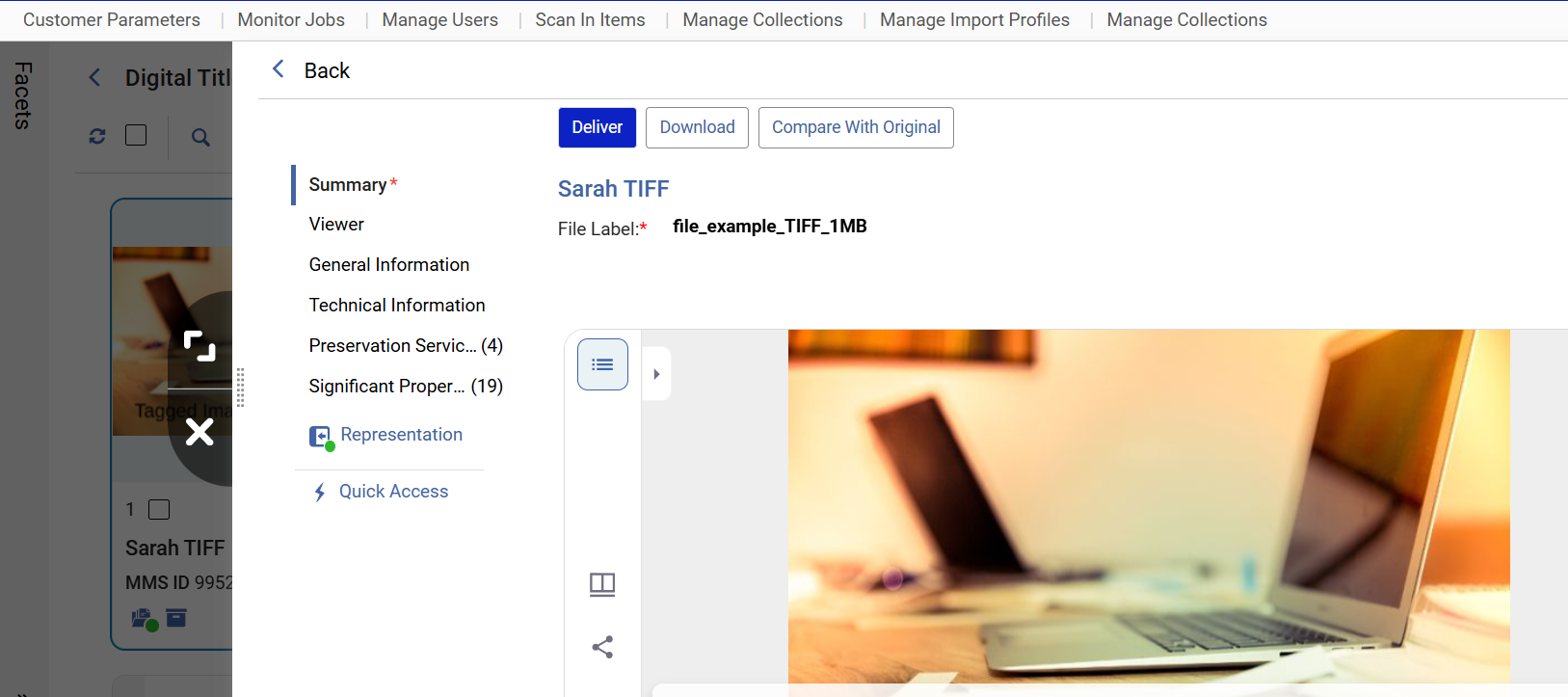
The right-hand-side of every file will include dedicated sections for preservation data, including:
-
General technical information: File format, MIME type, fixity checksum value, extension, size, file validity, file well-formedness.
-
Preservation Services: A checklist of all preservation services which ran on the file, result – passed / failed, agent which ran the service, date the service ran and details in case of failure.
-
Significant Properties: A dynamic list of all significant technical properties extracted from the file by JHOVE or similar, used by the system to determine current or future risks or for the data analysts to analyze technical aspects of the file.