
Editing Targets
You can edit targets from the List of Targets.
- Click the Edit button
 next to the target you want to edit.
- If the target is global, not available for CDI activation, the following dialog box opens:
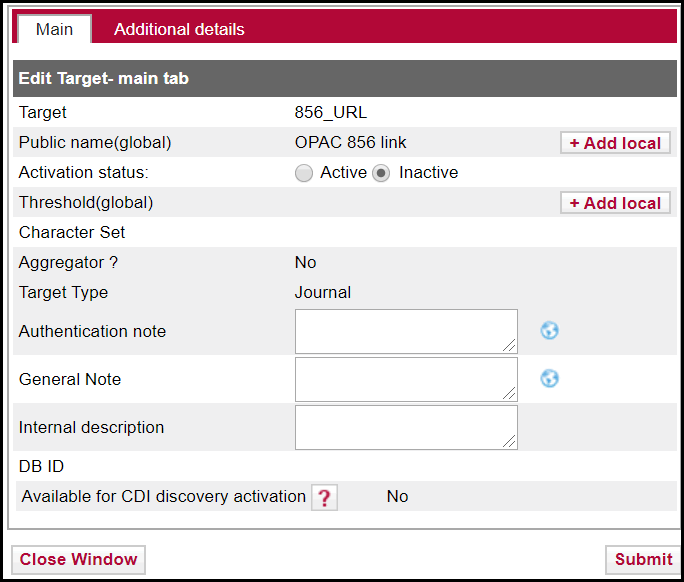 Edit Target
- Fill in the fields according to the following table:
Edit Target Field Description Target The name of the target for internal use. Public Name The title of the target displayed to the user in the SFX menu. Do not use the # character in the public name of the target. This causes problems when exporting database information. Activation Status Indicates if the target is active. If institutes have been defined in the instance, the Institute field is displayed, indicating the activation per institute. For more information about institutes, refer to the Institute Feature section of the SFX Advanced User's Guide. Threshold Limitations on the availability of this target Character Set The type of characters used to display information by this target. By default, the character set used for targets is LATIN-1. The Character Set field can be used to specify a different character set for a particular target. See the Character Set Values Used in the Target char_set Field for a complete list of character set values that can be chosen. Aggregator Indicates if the target is an aggregator. Target Type The type of the target. Possible values are: - Journal
- Book
- Mixed
- A&I
- Web Service
- OPAC
Authentication Note User authentication to be displayed in the SFX menu. For example, you can enter the user name and password needed to log on to the target. HTML tags can be used to make text italic or bold. For example:
Authentication needed -
login:bibuser –
password:xxxxx
To assign different local authentication notes per language defined in the instance, click the Globe icon.
The globe icon appears gray if no local translations exist and appears yellow if local translations were added.
General Note General information to be displayed in the SFX menu.HTML tags can be used to make text italic or bold.
To assign different local general notes per language defined in the instance, click the Globe icon.
The globe icon appears gray if no local translations exist and appears yellow if local translations were added.
Internal Description Internal notes for a target. These are displayed only in the Admin Center interface. DB ID An identifier used in CDI. Included in the CDI export for the SFX instance when publishing the CDI holdings file of the institution. Available for CDI discovery activation Yes indicates that this target can be activated for discovery independent from its full text activation status. This is the case for targets where at least 80% of the collection is indexed either directly (via provider content) or indirectly (via alternative coverage by metadata from other collections that index the same material) in CDI. Note that other targets of the same provider may also be indexed in CDI even if they are not marked as Available for CDI discovery activation. This is the case if a target cannot be activated for discovery in CDI separately from the full text activation. Some HTML/JS tags are not allowed in KBManager fields for security reasons (to prevent XSS). It is possible to disable XSS for specific fields, for example, if you want to embed license information in iframes in the SFX menu. For more information on disabling XSS, see the XSS - Cross-Site Scripting Security Breach section of the SFX System Administration Guide. - To add a local public name, click +Add local. The Public Name (local) field appears with a globe icon:
 Add Public Local Name
The globe icon appears gray if no local translations exist and appears yellow if local translations were added.
To remove the local public name, click Clear local. Note that clicking this button also removes the language specific local public names you added (see the next step).
Enter a local public name. To assign different local public names per language, click the Globe icon. The languages that you have configured appear (see Show Language Drop-Down). For example:
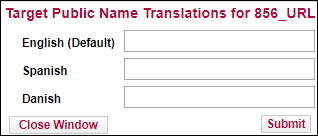 Public Local Name Translations
Enter a public local name for each language. These override the local public name you entered on the previous page.
Click Submit.
To add a local threshold, click +Add local. (See Threshold Composer for more information.)
- Fill in the fields according to the following table:
If the target is not available for CDI activation, the following dialog box opens:
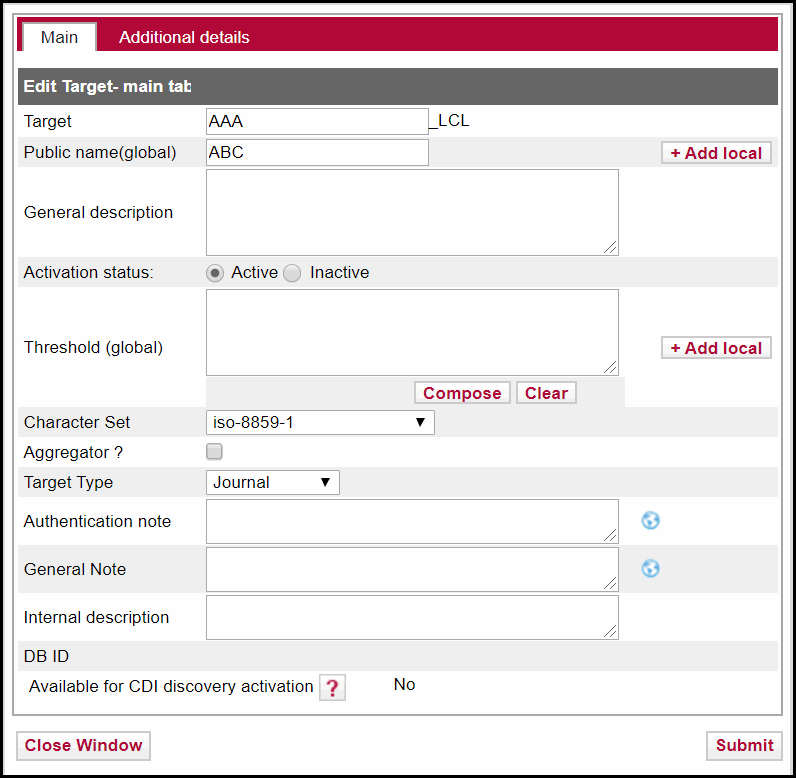 Edit Local Target
Fill in the fields as described in Edit Target.
If the target is available for CDI activation, the following fields appear in the Edit Target dialog box:
 Edit Target in CDI
The following table describes the fields of this dialog box:
- If the target is global, not available for CDI activation, the following dialog box opens:
-
For additional details, click the Additional Details tab.
-
To confirm the changes, click Submit.
